Beautiful lakes, an active downtown, established neighborhoods, and a central location between Tampa and Orlando; discover the lifestyle of Lakeland.
Lakeland isn’t simply a suburb of Tampa or Orlando. It’s a city with its own downtown, neighborhoods, businesses, recreation, and identity.
Located in Polk County along the I-4 corridor, Lakeland gives residents access to both sides of Central Florida while offering a lifestyle that can feel very different from the larger metro areas.
Lakes are part of the city’s everyday landscape, while Downtown Lakeland brings together local restaurants, shops, community events, historic architecture, and public spaces. Beyond downtown, buyers can explore everything from established neighborhoods with mature trees to newer residential communities.
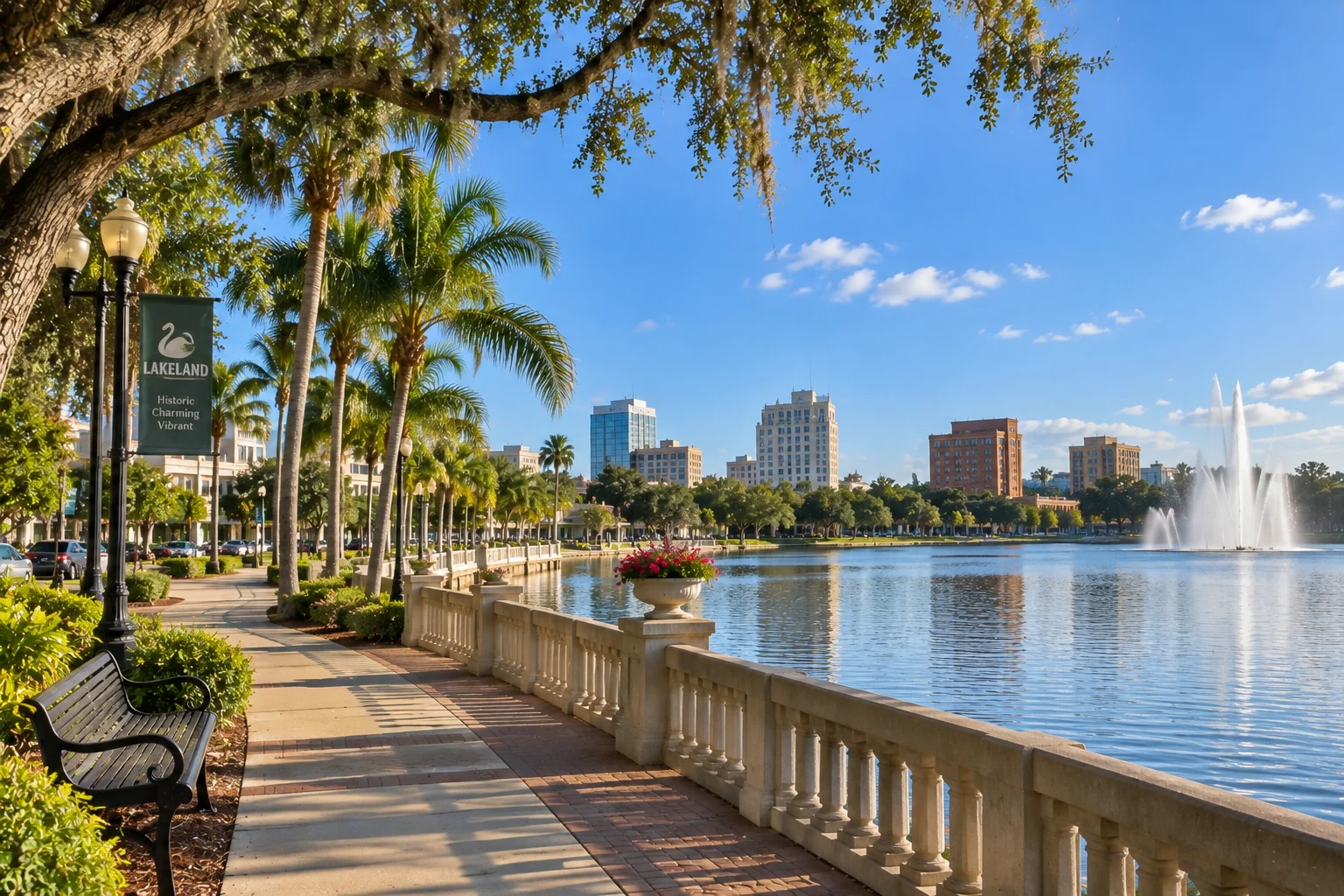
Lakeland lives up to its name. Lakes are woven throughout the city and help shape its scenery, neighborhoods, parks, and outdoor lifestyle.
Lake Mirror is one of the city’s recognizable downtown landmarks, surrounded by walking areas, historic architecture, and Hollis Garden. Other lakes and green spaces throughout Lakeland give residents opportunities to walk, enjoy the outdoors, and experience a side of Central Florida that feels surprisingly peaceful.
Bonnet Springs Park adds another major outdoor destination near downtown, with trails, gardens, open spaces, and recreational areas designed for spending time outside.
Downtown Lakeland brings together historic architecture, local restaurants, shops, community events, and public spaces in a compact city center.
Lake Mirror sits right beside downtown, creating an unusual combination of city life and waterfront scenery. Nearby destinations such as Hollis Garden and the surrounding historic areas add to the character of this part of Lakeland.
For buyers who enjoy having local restaurants, events, parks, and community spaces nearby, exploring the neighborhoods surrounding downtown can offer a very different lifestyle from Lakeland’s newer suburban communities.
Lakeland’s location along I-4 is one of its most distinctive advantages. The city sits between the Tampa Bay and Orlando areas, which can make it worth considering for households whose work, family, or activities extend across Central Florida.
But location within Lakeland matters. Access to I-4 can vary depending on the neighborhood, and traffic conditions change throughout the day.
Instead of relying only on an online commute estimate, I recommend testing the routes that would actually be part of your routine before choosing a home.
Lakeland offers a broad housing mix. Buyers can explore established neighborhoods with mature landscaping, older homes with character, townhomes, gated communities, newer subdivisions, and new construction.
Some areas feel closely connected to downtown and the city’s lakes, while others offer a more suburban setting with newer homes and community amenities.
When comparing properties, look beyond the purchase price. Home age, insurance, HOA or community fees, lot size, location, and future maintenance can all affect the true cost of owning the home.
Location & Commute: Decide whether your daily life points you toward I-4, Downtown Lakeland, Tampa, Orlando, or somewhere else in Polk County.
Schools: Lakeland is served by Polk County Public Schools. School assignments are property-specific, so verify the exact address directly with the district.
HOA & Community Costs: Fees and community rules vary. Compare the total monthly cost of each property rather than looking only at the mortgage payment.
Insurance & Property Condition: Insurance costs can vary based on the individual home. Roof age, construction, property condition, and other factors should be reviewed during the buying process.
Lakes & Flood Information: Living near water can be beautiful, but proximity to a lake doesn’t tell you everything about a property’s flood risk. Check the specific property and available flood information.
If you’re deciding between Tampa Bay, Lakeland, or other Central Florida communities, you don’t have to choose based on listings alone.
Tell me how you want to live, where you need to go, what type of home you’re looking for, and what matters most to your budget. I’ll help you compare the options and narrow down the areas that make sense for your move.